Opinion · August 13, 2026 · 12 min read
Friends Seems More Personal and That's Because It Is on Whistlr
Why friendships feel more personal on Whistlr: Close Friends Stories, private Circuits, Thoughts, mood, and privacy tools that help you share honestly.
Friendships on Whistlr feel more personal because the app gives you real control over who sees what. Close Friends Stories, private Circuits, profile Thoughts, mood, Top 8, and detailed privacy settings let you share with the people who actually know you instead of performing for an anonymous crowd. When you know who is listening, you tend to post more honestly, and honesty is what makes an online friendship feel real. This piece explains why that works and how to set Whistlr up for your own circle.
Audience Versus Friends: Why the Difference Matters Online
Over the past couple of decades, the word "friend" has been stretched almost beyond recognition online. Now it can mean anyone who tapped follow once, a tally that mostly exists to look impressive. Meanwhile, the people who actually play that role for you, who know your history and notice when you go quiet, ended up in the same stream as brands, acquaintances, and strangers chosen by an algorithm.
Those are fundamentally different relationships. An audience is a group you present to. Friends are people you share with. You can enjoy both, but treating them as the same thing creates a quiet strain. You end up writing every post for the widest possible reader, which usually means writing it for nobody in particular.
Whistlr does not pretend the two are identical. It still has discovery, trending content, and ways to reach new people, but it also gives you clear tools to carve out spaces where only your people are present. That distinction is the foundation of everything else in this article.
Context Collapse and the Pressure to Perform
Researchers who study online behavior use the term "context collapse" for what happens when a single post has to work for everyone at once: your family, your coworkers, your old classmates, and total strangers. In everyday life, you talk differently to each of those groups. Online, a public post flattens them into one audience, and most people respond by sanding off anything too specific, too vulnerable, or too inside-joke to survive that mixed crowd.
How Guardedness Creeps In
Hardly anyone chooses to get cagey on social apps on purpose. The shift arrives in small steps that each seem reasonable. You skip the messy update because it would need too much explanation. You hold back the unflattering photo because it is not polished enough. You keep a vulnerable thought to yourself since a near-stranger could pass it around. Repeat that for years and you end up highly connected and strangely unknown, sharing a curated version of yourself that the people closest to you already see through.
What Changes When You Know Your Readers
When you can name every person likely to read a post, and each one cares about you, the content does not get duller. It gets truer. Captions get shorter and more specific. A blurry photo needs no justification. A three-word update about a rough day becomes a perfectly normal thing to share, because it is not content at all. It is just you, telling your friends something real.
When you know who is listening, you stop performing and start sharing.
The Whistlr Features That Keep Friendships Personal
"Personal" can sound like marketing, but on Whistlr it traces back to specific tools. Each one gives you a way to choose a smaller, more trusted room.
- Close Friends for Stories: Share a Story with only the people on your Close Friends list. It is ideal for the unfiltered moments that are not meant for everyone.
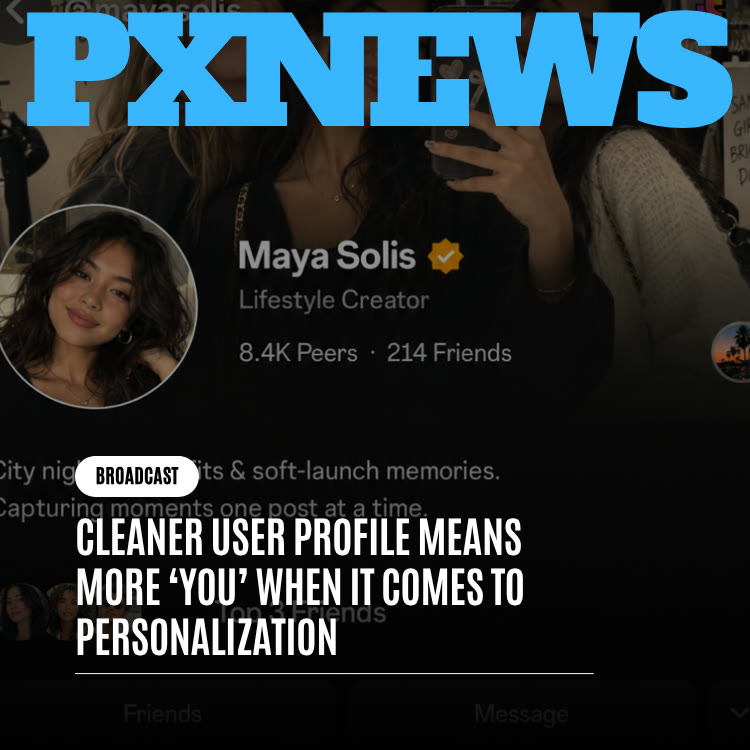
- Thoughts on your profile: Post a short thought that appears on your profile for people who visit. It is a low-pressure way to share what is on your mind without making a full post.
- Mood: Set a mood on your profile so the people who care can see how you are actually doing and check in.
- Top 8: Highlight the people who matter most to you right on your profile, a small, deliberate statement about your real circle.
- Relationship status: Reflect the actual shape of your closest connections. The options go well beyond a simple single or taken, as covered in our relationship status article.
- Circuits and SubCircuits: Community spaces that can be public or private, with join requests, owners, and moderators. A private SubCircuit can hold a friend group, a team, or a club.
- Direct messages, group chats, and calls: Private conversations with one person or a group, plus video calls and live audio Rooms when typing is not enough.
Individually, each might seem like a small feature. Together they form a pattern: Whistlr keeps offering you smaller rooms alongside the big stage, and lets you decide which one a moment belongs in.
How to Set Up Whistlr for Your Real Friends
A few minutes in settings can change how personal Whistlr feels. Here is a practical setup for anyone who wants their account to center on the people they know.
- Decide on account privacy: If you want only approved peers to see your posts, switch to a private account. You can change it later.
- Build your Close Friends list: Add the people you would text about a bad day. Use it whenever a Story feels too personal for everyone.
- Choose your Top 8: Put your real circle on your profile. Update it as friendships grow and change.
- Set a mood and share a Thought: Give friends an easy opening to check in without you having to announce anything.
- Start or join a private Circuit: Create a space for a specific group, such as old roommates, your team, or a hobby crew, where conversations stay among members.
- Tune who can reach you: Adjust who can tag or mention you, use message requests to filter new DMs, and decide whether to show your online status and last seen.
- Turn down the pressure on posts: Hide like counts or turn off comments on a post when you want to share without inviting a scoreboard.
For a full tour of the controls available, see Take Control of Your Experience.
What Closeness Looks Like on an Ordinary Day
Personal connection is rarely dramatic. It is built from small, unremarkable moments of being noticed. On Whistlr, those moments tend to look something like this.
- A late-night Thought: You post that you cannot sleep, and a friend who sees it on your profile sends a message a few minutes later.
- A long-running group chat: A handful of friends from school still argue there about where to eat, and it is still the first place anyone shares big news.
- An honest mood: You set your mood to tired or overwhelmed, and someone responds to how you feel instead of to a caption crafted to get reactions.
- A Close Friends Story: The bad haircut, the chaotic kitchen, the ordinary Tuesday, shared only with the few people who will laugh with you.
- A private Circuit thread: Your book club or running group plans the next meetup in a space where everyone knows everyone.
None of this would make a highlight reel, and that is the point. Friendship is mostly small moments, and any app hoping to feel intimate must leave space for them.
Small Habits That Keep Friendships Active
Tools only help if you use them, and a few small routines make a noticeable difference. Glance at your friends' moods and Thoughts before scrolling a trending feed. Reply to a Close Friends Story with a real message instead of a quick reaction. Drop a song you know a friend will love into your DMs. Revisit your Top 8 every few months so it reflects who you actually talk to. None of these take more than a minute, and together they keep friendships from fading into a list of names you rarely interact with.
Why Smaller Rooms Encourage More Honest Sharing
There is a simple psychological reason small spaces feel different. When you can picture who is reading, you can predict how they will react, and that predictability makes vulnerability feel safe. Once a crowd gets too big to picture, uncertainty creeps in, and uncertainty makes people careful. A room of five close friends and a room of five thousand strangers are both technically social, but they produce completely different behavior.
That is why the ability to subdivide matters. A Circuit can be a broad community, and a private SubCircuit inside it can be a much smaller group for conversations that need more trust. Close Friends does the same for Stories. Rather than flattening every relationship into one big list, Whistlr lets intimate groups stay intimate. Many platforms push in the opposite direction, growing every space as large as possible because larger spaces generate more activity. Offering smaller rooms is a deliberate choice to value depth as well as breadth.
Closeness Over Reach: The Thinking Behind the Product
For much of social media's history, the guiding business logic has rewarded sheer exposure, measured in views, minutes, and distribution. By that math, a handful of friends reading your update counts for less than one seen by thousands of strangers, so systems built only for reach gradually nudge everyone toward performing for strangers.
AJ, ETAPX's founder and CEO, has described a different priority for Whistlr. In his framing, the measure that matters is whether people grow closer to the circle they already have, not simply whether the numbers get bigger, and a feature that only inflates numbers is not worth shipping. The team has also talked about avoiding addictive design patterns and favoring genuine connection over engagement for its own sake. You can read more about that broader mission in The Mission Is to Bring Online Life Into Your Real Life Mix.
Discovery Still Has a Place
This does not mean Whistlr is closed off. Feeds such as Minis and Chattr blend posts from people you follow with posts from accounts you do not follow yet, so new voices can find you and you can find them. The difference is that reach is one option among several rather than the only thing the product is built around. You choose when to step onto the big stage and when to stay in the kitchen with your friends.
What Personal Connection Means for Creators and Businesses
If you use Whistlr to build an audience or a business, the friend-first design might sound like a limitation. In practice, it is an opportunity. People trust accounts that feel personal, and the same tools that keep friendships close can help you build a loyal community around your work.
- Treat peers like people: Reply to comments and DMs in your own voice. Personal responses turn casual viewers into regulars.
- Know your top fans: Once verified, your professional dashboard insights show top fans and accounts engaged, so you can recognize the people who show up most.
- Build an inner circle: A private Circuit for your most engaged supporters gives them a space that feels closer than your public feed.
- Offer something exclusive: Subscription Vault lets your biggest supporters unlock photos and videos you do not post publicly.
- Show the behind-the-scenes: Stories and live streams reveal the person behind the brand, which builds the kind of trust a polished ad cannot.
- Respect boundaries: Do not add strangers to group chats or flood DMs with promotions. Personal works only when it feels welcome.
There is a practical payoff, too. Followers who feel personally recognized are more likely to share your posts with their own friends, and Whistlr's ranking treats reposts as a stronger signal than likes. A community that feels close to you does some of your distribution for you, simply because people enjoy passing along work from someone they feel they know.
Finding Balance Between Your Circle and the Wider Feed
Most people want both: a close circle where they can be themselves and a wider world to explore. The healthiest way to use Whistlr is to be intentional about which is which. Share the unfiltered stuff with Close Friends or a private Circuit. Post your best work publicly when you want new people to find it. Check in on your friends' moods and Thoughts before you lose yourself in a trending feed.
Years of social apps blurred two different things: having lots of connections and being truly understood. Whistlr's bet is that giving your closest people a real home on the app brings the second one back.
Frequently Asked Questions
Why do friendships feel more personal on Whistlr?
Because the app gives you clear ways to share with a chosen group, such as Close Friends Stories, private Circuits, and profile features like Thoughts, mood, and Top 8. Knowing exactly who will see a post encourages more honest sharing, which makes interactions feel personal.
How do I share a Story with only close friends on Whistlr?
Add people to your Close Friends list, then choose Close Friends as the audience when you post a Story. Only people on that list will see it.
What are Circuits and SubCircuits?
Circuits are community spaces on Whistlr, and SubCircuits are focused spaces within them. They can be public or private, with owners, moderators, and join requests, so you can create anything from an open fan community to a private group for close friends.
Can I make my Whistlr account private?
Yes. You can switch to a private account so only approved peers see your posts. You can also control who tags or mentions you, whether your online status shows, and who can message you.
Does Whistlr still show me posts from people I don't follow?
Yes. Feeds such as Minis and Chattr mix posts from accounts you follow with content from new accounts, so discovery still happens. The personal tools simply give you a choice about where each moment belongs.
How can a business use Whistlr's personal features?
Respond to people individually, use insights to recognize top fans, consider a private Circuit for loyal supporters, and share behind-the-scenes Stories. Keeping interactions genuine builds trust that broad promotion alone cannot.
Friends are what turn a place you pass through into a place that feels like home. Whistlr was built with that in mind, which is why its most personal corners are reserved for your own circle.